New Deep Sea Discoveries
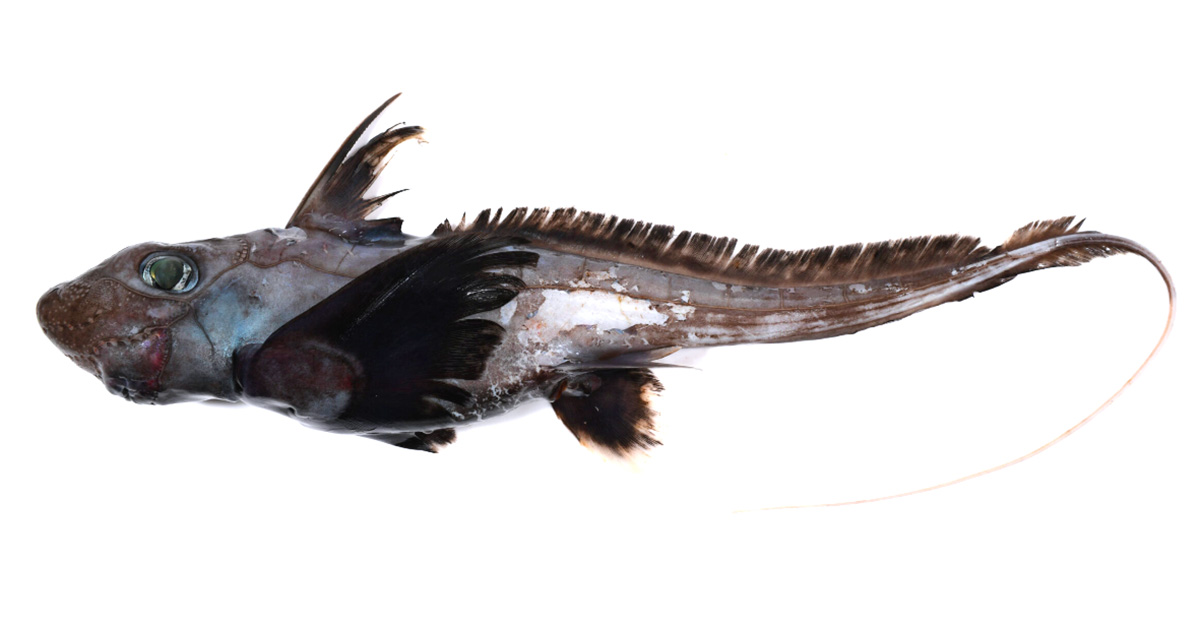
This “Ghost Shark” Chimera was found more than 2,600 feet below the ocean surface.
Image: oceancensus.org
Last year, scientists found 1,121 new marine species! These creatures were previously unknown to scientists and were found while searching some very remote and rarely explored waters. The discoveries are part of the Nippon Foundation-Nekton Ocean Census’ mission to document ocean life.
The discoveries were made during 13 expeditions carried out all around the world and conducted with several other scientific organizations. The expeditions found a wide range of species living beneath the ocean surface, including one of the most noteworthy discoveries: the ‘Ghost Shark’ Chimaera in Australia’s Coral Sea.
Chimaeras are among the most mysterious inhabitants of the deep sea in part because of how deep they reside and in part because the fish have such a unique appearance. They have large eyes, a single gill opening, and no scales on their smooth skin. The recently identified chimaera species was found more than 2,600 feet below the ocean surface! Chimaeras are distant relatives of sharks and rays, having diverged from their shared ancestors nearly 400 million years ago—predating the dinosaurs!
While sharks get a bad name today courtesy of movies, they are vulnerable to commercial fishing, habitat loss, and pollution. Today, a third of sharks, rays and chimaeras are vulnerable to extinction.
What may be more surprising than the number of species identified last year is how many fish and creatures have yet to be identified—up to 90 percent of marine species have yet to be documented by scientists! Researchers are working to change that as quickly as possible.
“With many species at risk of disappearing before they are even documented, we are in a race against time to understand and protect ocean life,” said Dr. Michelle Taylor, head of science at Ocean Census.
The organization is working with scientists to significantly increase how quickly new marine species are recognized and documented. “By accelerating discovery and sharing data globally, we are not just finding new life, but generating the evidence needed to drive global science and policy at a critical
moment.”