
Arizona’s Creepy Crawlies!
Feature images: shutterstock.com
Spring is here, and whether you’re down on the desert floor or up in the mountains, creepy crawlies are out and about!
Boosted by more rain than other deserts, the Sonoran Desert is surprisingly lush with thousands of plant varieties (2,000–3,500 species). Depending on where you’re at, our desert can average from 3” to 20” of PRECIPITATION.
All the different terrain and plants provide lots of habitat for wildlife here. In fact, many scientists call it the most biodiverse desert on the planet! As a result, the creepy crawlies here are plentiful and fantastic.
Robin Kropp, an education specialist at the Arizona-Sonora Desert Museum since 1998, grew up learning about Sonoran wildlife. She says that she found creepy crawlies (small critters that freak many people out because of how they look or move) absolutely fascinating!
“I totally did. I think mostly because my mom was out and about,” Kropp recalls. Her mom made it a point to share what she had come across. “So for sure it was always a part of my radar,” she continues.
From hunters like black widow spiders and Gila monsters to critters that emerge during the monsoon like millipedes and spadefoots—have fun learning about our creepy crawlies!
“The ones living here in the Sonoran Desert are going to be really good at dealing with some of the big challenges,” Kropp notes. Not only can temperatures soar, but they can also plunge at night, dropping below freezing during winter and early spring. Almost all our rain falls in the summer with monsoons and during winter storms. So the animals and plants around here must be tough enough to handle such extremes. the world!
Couch’s Spadefoot (Scaphiopus couchi)
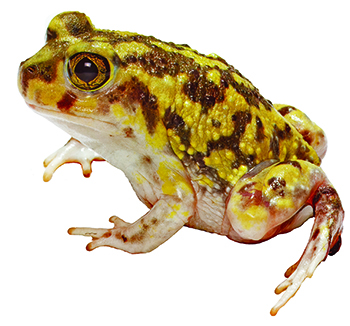
Check out my new exhibit!
Couch’s Spadefoot (Scaphiopus couchi)
These amazing little amphibians ESTIVATE (spend most of the year in a state of inactivity) buried underground.
Upon feeling the shake of monsoon thunder or the vibration of heavy summer rains, “they come right out and they find a big rain puddle,” Kropp describes. Hundreds get in and make a loud call that sounds like a bleating goat. In the temporary pond, the females lay their glob of eggs to be fertilized. Tadpoles hatch and begin eating and growing. The tail and gills recede, legs emerge and lungs develop. “Around here, they go through all that in just nine days,” she continues. Since the puddles can evaporate in days, spadefoots develop quickly. They keep eating and growing as the puddle dries up. On their hind feet is a hardened nubbin that helps it dig so it can estivate until next year’s monsoon.
Coincidentally, the Desert Museum just opened its new stream and exhibit for guests, young and old to explore and cool off! “It’s a kid-friendly, family-friendly place for our littlest learners (ages 0–5), and that can really be for anyone who wants to play in a desert stream—you can be an 80-year-old and enjoy Spadefoot Splash,” Kropp encourages. Guests can also see some endangered or threatened species on exhibit there, including spadefoots!
Desert Millipede and Centipedes
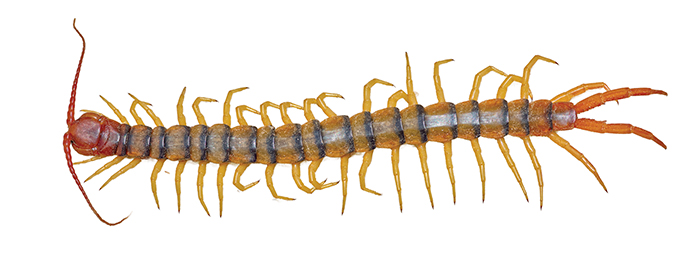
Just look, don’t touch!
It doesn’t get much creepier and crawlier than millipedes and centipedes! These alien-looking arthropods (critters with external skeletons and jointed legs) have long, segmented bodies with lots of legs.
Centipedes are more colorful and only have a pair of legs for each segment. The giant desert centipede gets up to 8” long. The smaller common one grows to 4 to 5 inches. Kropp says the bright colors on a critter are often a warning that it’s best left alone. While their venomous “pinch” is painful to humans, it’s usually not dangerous. They use their venom to hunt small insects, lizards and even small rodents at night.
Millipedes are some of Kropp’s favorite desert creatures. “People might be grossed out by and think it’s creepy with all those legs,” she says. As they molt, they add segments with two pairs of legs per segment. This can add up to 400 legs! “The nickname is rain worms. The thing that I love is that if it’s good habitat, they all emerge from the ground after a big storm and they’re just everywhere. It’s so cool to see them moving around and doing their thing,” Kropp says. “They’re actually a really important decomposer. Decomposers are animals that eat (organic) stuff and help break it up and put back nutrients into the soil so that plants can grow.”
Spiders and Scorpions
What would a desert be without spiders and scorpions?! There may be more than 1,000 different kinds of spiders in the Sonoran Desert. Black widows, with their venomous bite and super strong, crazy-looking webs, aren’t welcome houseguests. While both spiders and scorpions can handle warm temperatures, they avoid the heat by retreating to shady, cooler places during the day.
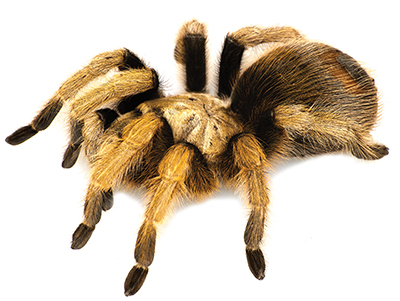
A Desert Blonde Tarantula!
“Both scorpions and black widows are nocturnal, so they’re active in the cooler times at night. (Avoiding direct sunlight) they’ll retreat to a dark crack or crevice,” Kropp explains. Scorpions often live in rock piles or maybe a pile of dead saguaro ribs. Some scorpion stings are more venomous than others. Stings of the giant desert hairy scorpion, for example, are more on the level of bee stings. But the little bark scorpion really packs a painful punch and can cause numbness of the area for a few days.
Another of Kropp’s favorite creepy crawlies is the blonde tarantula (Aphonopelma chalcodes). “Even though they’re really big and hairy and scary looking, they’re actually a very gentle spider—unless you’re a cricket or a grasshopper or a cockroach!” she says. “I just love their nature and their beautiful, hairy bodies and the way they move and the way they dig their hole in the ground for their home.”
Gila Monster (Heloderma suspectum)
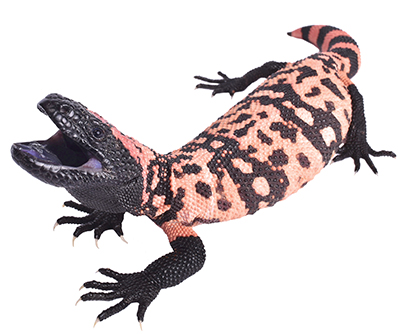
This heavy-bodied reptile is the Sonoran Desert’s most famous lizard! Its distinctive pattern on its bumpy skin can be either orange-, yellow- or pink-and-black. Gila monsters and the Mexican beaded lizard are the only two lizards that have strongly venomous bites, which are used to hunt prey like rodents, toads, other lizards, birds and bird eggs. Their thick tails store fat for when food is SCANT.
Living in foothills and grasslands of the Southwestern U.S. and northwestern Mexico, they’ll avoid the heat of the day by burrowing or finding shade beneath rocky ledges or bushes. They are a protected species, so observe from a safe distance but don’t touch!
Safety Tips
If you go out and about, plan to explore with an adult when it’s cooler. Bring enough water, put on sunscreen every couple hours, wear a hat with a broad brim and close-toed shoes or boots. Remember we are the rattlesnake capital of the U.S. with more than a dozen species. “We’re in their home, and we just need to learn to pay attention. Don’t put your hands or your feet in a place that you can’t see,” Kropp warns. If out walking the family pooch, keep it on a leash and don’t let it stick its nose in holes and under plants where rattlers might be. If it could get dark on a walk, bring a flashlight so you can see what might be crawling around.
Around your house, it’s a good idea to keep a clear perimeter. “We need to be good housekeepers of our patios and keep brush and other things from growing right next to our home,” she says. Plants, pots and woodpiles can provide hiding places for critters you don’t want getting into your home.
Learn More About Creepy Crawlies!
Kropp encourages everyone—young and old—to learn about desert wildlife and how even the creepiest critters fit into the Sonoran Desert. “I think it’s really important to know about them so they aren’t afraid of them,” she explains. “Animals have important roles. Snakes—all eat other animals—are good at getting into tight spaces. Animals like rats have lots and lots of babies. Your predators, like snakes, are really important because they help keep a balance of all the other animals that are out there.”
The Arizona-Sonora Desert Museum and Saguaro National Park are great places to visit. To learn about something you come across, she suggests getting the Seek app by iNaturalist and checking out the detailed profiles on the Desert Museum website: desertmuseum.org/kids/oz/long-fact-sheets/
Whether you celebrate with cake and candles, a party and presents, new clothes or new responsibilities, here’s hoping that this year your birthday is a fun and memorable event that marks a great year ahead!