
Asteroid Makes a Close Pass by Earth
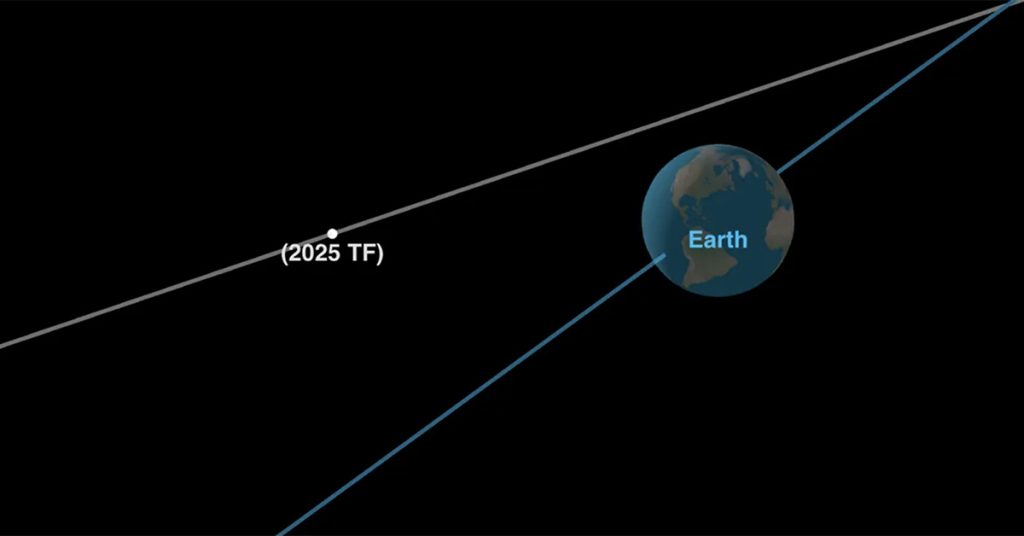
A large asteroid came within 300 miles of hitting Earth last month…and scientists only realized it after the asteroid had sailed past!
The 9.8-foot space rock, known as 2025 TF, flew over Antarctica at an altitude of just 265 miles, which is closer to the Earth’s surface than the orbit of the International Space Station.
The good news? There’s no need for alarm. Based on the rock’s size, it likely would’ve burned up in Earth’s atmosphere and posed no serious threat to us. Although used interchangeably, there are a few key space terms to know.
Meteoroids are space rocks that range in size from dust grains to small asteroids. They’re only called meteoroids when the rocks are still in space.
A meteor is a piece of ancient space rock that falls to Earth, burning up in the atmosphere. Meteors are sometimes known as “shooting stars” or “fireballs” because they can briefly light up the sky. NASA estimates that about 48.5 tons of meteoritic material falls on Earth each day!
Space rocks that survive hurtling through the atmosphere and hit Earth are called meteorites. More than 50,000 meteorites have been found. Most are pieces of asteroids while a very small fraction come from Mars and the moon. Many are spotted in advance and kept under observation, but scientists do miss some—after all, space is a VAST place!
In the case of 2025 TF, its small size made it extremely difficult to spot. Every year, space agencies around the world discover thousands of near-Earth asteroids (NEAs). These space rocks vary significantly in size. Those like 2025 TF are considered harmless, but asteroids larger than 460 feet in diameter are potentially hazardous. As of Oct. 4, there were 39,585 known NEAs, and almost all are deemed harmless.