
Little Kiwi Is Making a Big Comeback!
A rare bird has been “spotted” for the first time since 1978 on the main islands of New Zealand.
The bird, a kiwi pukupuku, is also known as a dwarf or little spotted kiwi. There are five species of kiwi, and the kiwi pukupuku is the smallest species—weighing in at a maximum of about 5 pounds. Scientists estimate 2,000 of the little spotted kiwi remain, but that number is increasing thanks to conservation efforts.
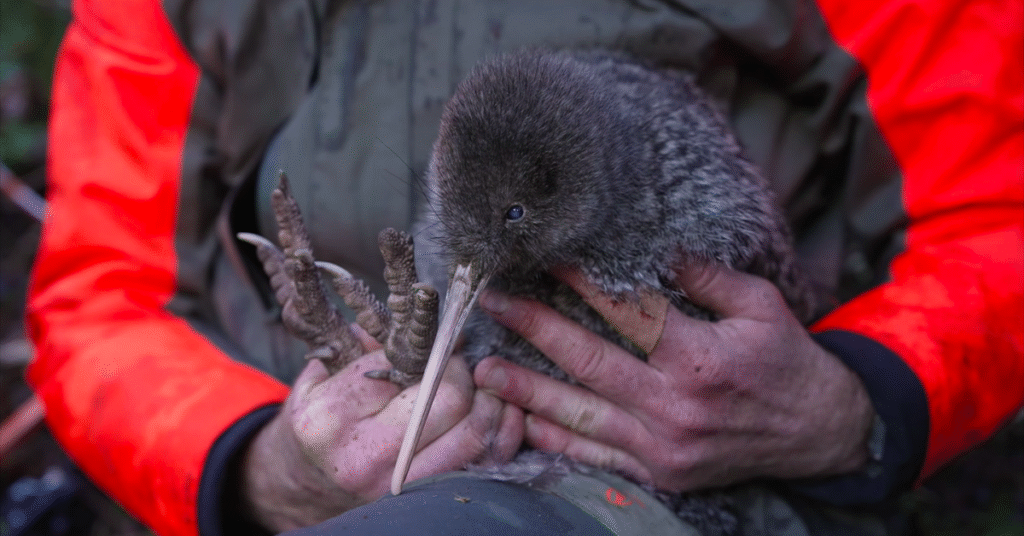
Kiwi are flightless birds that sleep in burrows during the day, becoming active at night to find food in the soil and letting out loud, shrill calls. They’re also the only birds in the world with nostrils at the end of their beaks!
For the last 50 years, the little spotted kiwi was thought to be extinct on the main islands, only being found on New Zealand’s offshore islands and in fenced predator-free spaces.
The search for the little bird began after a hunter spotted it in March in a remote wilderness area. The Department of Conservation brought in Biodiversity Ranger Iain Graham and his conservation dog, Brew, to locate the bird.
“I heard kiwi calling the first night—two of them duetting—and immediately knew they didn’t sound like other kiwi. It was exciting, but it took a few days to narrow down the area,” said Graham.
Graham and Brew work through a government program that mentors, certifies and supports teams in detecting New Zealand’s protected species. Graham and Brew were flown in to the remote area to search for the little spotted kiwi.
“We’re grateful to the hunter for reporting this and capturing evidence. It was like finding a needle in a haystack, but he pointed us to the right patch to start searching,” said Kiwi Recovery Group leader Emily King. “Kiwi pukupuku are one of those unique species which make Aotearoa New Zealand so special. I’m not sure how to express how thrilling this rediscovery is for the conservation world!”