
Culinary Kids

These kids are cooking up some food, fun and a healthier future!
Healthy Living Ambassadors Get Cooking!
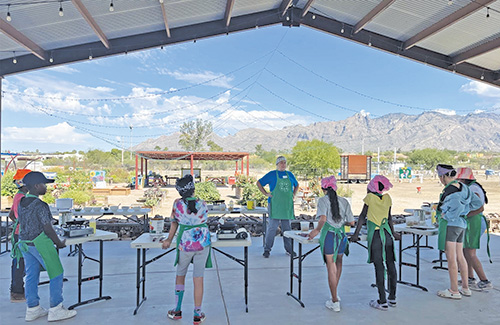
Healthy Living Ambassadors is a program of 4-H that teaches kids ages 12–18 about nutrition and more. Kids can learn knife skills and kitchen safety, get recipe ideas, and get an up close perspective on the benefits of farm-to-table living.

“I feel really excited to have an HLA program in Maricopa County,” says Alex Kolnacki, who grew up in Tucson and was part of the program at Tucson Village Farm. Kolnacki is an ASU graduate who now lives in the Valley. She is the program coordinator for 4-H Youth Development at the University of Arizona’s Maricopa County Cooperative Extension. She is working to develop the Healthy Living Ambassadors program in the Valley.
“I know firsthand all of the benefits of the program, so I feel very lucky that I get to establish one in Maricopa,” says Kolnacki. “The club focuses on healthy living from a holistic point of view,” she explains, allowing teens to become ADVOCATES for health in their own community.
HLA focuses on nutrition, mental well-being, fitness, and other topics related to healthy living. Like all 4-H programs, HLA hones leadership skills and promotes workforce readiness, says Kolnacki, helping to prepare kids today to achieve their goals tomorrow.
Kids in HLA work in the garden, learn about SEASONAL produce, and get to know the nutritional value of local fruits and vegetables. They go from learning “why it’s so important to eat seasonally and cut down on food waste” to “preparing foods that are healthy and also delicious,” says Kolnacki.
The kitchen at Maricopa County Cooperative Extension allows for farm-to-table sessions, and there is “a lot of interest in the culinary programs,” says Kolnacki.
“In an urban area like the Valley, like Phoenix metro area, there’s a lot of kids that don’t have access to livestock or don’t really know what 4-H is,” says Kolnacki. “I think HLA is uniquely positioned to reach those populations of kids because it focuses not just on healthy living but also on leadership skills.”
From the kids who are already passionate about cooking, to ones for whom “this is their first exposure to using a knife or cooking a whole meal by themselves…to kids who are wanting to further their skills,” the HLA program has something to offer all of these aspiring young chefs, says Kolnacki.
Plus, learning about nutrition is always beneficial, according to Kolnacki. “Learning to take care of yourself in that way and form a healthy relationship to food is very important right now,” she says. “In this country we have such a large range of food related issues, from hunger to food-related diseases. I think learning about that at a young age is really important and they’re skills that you will take with you for your whole life.”

Statewide Culinary Contest Gives Kids Chef Experience
Tired of the food your school dishes out?
Well there’s an amazing culinary contest for Arizona kids that teaches students some of what it takes to be a chef as they create delicious dishes that have to meet federal school meal guidelines and more!
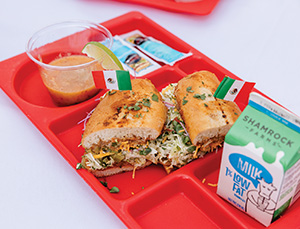
Feeding the Future is an annual contest that happens Jan. 24 next year at the Farm at South Mountain. It’s a program of the Blue Watermelon Project (BWP), a grassroots non-profit group that works with Arizona schools and other parts of the community to improve students’ relationship with food.
BWP was started in 2016 by Charleen Badman, an award-winning chef who got other chefs, local farmers, restaurateurs and others to support its hands-on programs.
Feeding the Future has elementary, middle school and high school teams paired with a mentor from the school and a volunteer chef. Students use creativity, maybe their family history of food, and some serious culinary concepts to create a DELECTABLE dish that can be served at school. High school teams create an entire lunch tray that meets federal school menu guidelines and costs no more than $1.50 per tray. Middle school teams create a breakfast tray, and elementary teams make a fruit side dish that costs 50 cents or less. Students learn about adjusting calories, sodium and saturated fat levels, and dishes need at least one locally grown ingredient.
“When they get there to the Farm at South Mountain, this is the culmination of several months of work. So they’ve done a lot of prep to qualify,” explains Sarah Martinelli, an ASU clinical associate professor in nutrition, a certified dietician and the coordinator for the competition. She says the winning recipes usually have a family story behind them. Go to bluewatermelonproject.org for more information.
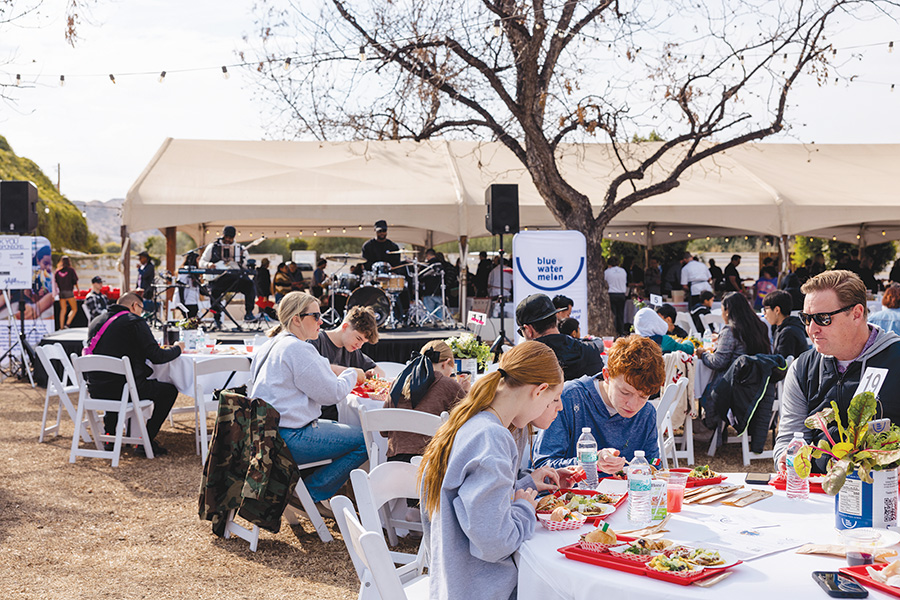
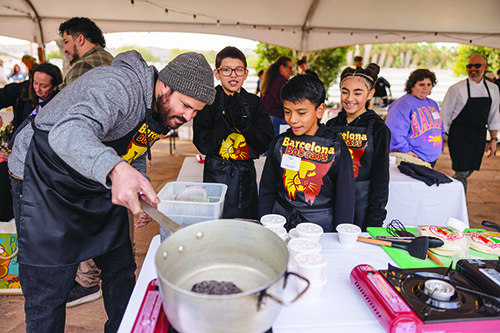
cooking or baking are prepared outdoors!
Try This at Home!
Pizza Beans
by Stephanie A Ganz—from simplyrecipes.com
Ingredients:
2 cans cannellini beans (30 oz)
2 cups marinara sauce
1 cup or more shredded cheese
Other pizza toppings
Directions:
Combine two 15-ounce cans of drained cannellini or butter beans, two cups jarred marinara sauce, and at least a cup of cheese like shredded mozzarella or a pizza cheese blend. Put in an oven safe
casserole dish.
(Optional: add in a half cup or so of ricotta cheese.
You can also add your favorite pizza toppings, like peppers, pepperoni, olives or other veggies.)
Bake in a 350°F oven until the sauce is bubbling and the cheese is melted, about 20 minutes.

