Cow’s Use of Tools Surprises Scientists
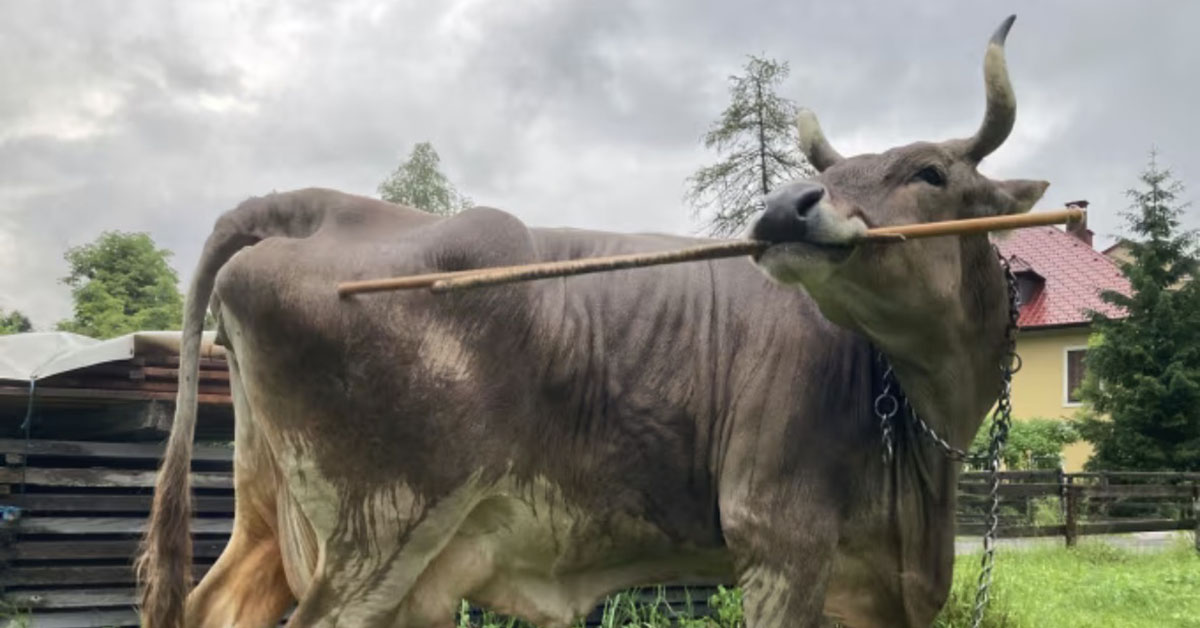
How does a cow scratch its itch? And no, this isn’t the start of a joke! For Veronika the cow, she simply picks up a stick and scratches herself. This Swiss Brown cow is a pet who lives on a farm in a small town in Austria. She roams around a green meadow and happily accepts greetings from neighbors.
Veronika’s owner has seen the cow occasionally picking up sticks with her mouth and scratching parts of her body she couldn’t otherwise reach. When a team of animal behavior experts saw a video of Veronika, they decided to do their own research.
Scientists from the University of Veterinary Medicine, Vienna, performed a series of controlled trials with Veronika. What they saw was astonishing: Veronika used her long tongue to pick up a brush and used different sides of it to scratch different parts of her body. Scientists do not think Veronika is a genius, but rather that her upbringing with a family and access to sticks and rakes may have provided special conditions allowing Veronika to pick up this skill.
“What this tells us is that cows have the potential to INNOVATE tool use, and we have ignored this fact for thousands of years,” said lead author Antonio J. Osuna-Mascaró, a researcher at the university in Vienna.
“Cows and other highly intelligent and emotional animals are far too often written off as being dumb and lacking emotions. Detailed research shows they are fully SENTIENT beings with very active brains and rich and deep emotional lives,” said Marc Bekoff, an emeritus professor of ecology and evolutionary biology at the University of Colorado, Boulder, who was not involved with the study.
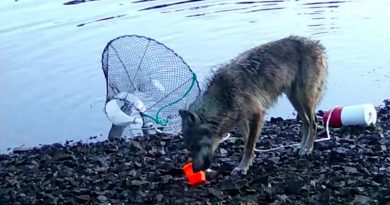
While this is news for our bovine friends, it’s not the first time an animal has been observed using tools. In 1960, Jane Goodall made the groundbreaking discovery that chimpanzees make and use tools. More recently, there have been reports of tool use in goats, orca whales, water buffalo, as well as a wild wolf in Canada. Every new observation allows scientists to gain further insight into the species who share
our world!